There is a moment that happens on almost every floor restoration project.
The sanding is finished. The final coat has cured. Furniture is still stacked in another room.
Someone walks into the space, stops, and looks down.
Not because the floor is shiny, but because they have forgotten what the timber actually looked like.
Wear happens gradually. Scratches build up over years. Old varnish darkens. Sunlight fades certain areas while rugs protect others. Most people stop noticing these changes because they see them every day.
Then the floor is restored.
The room often feels different afterwards. Not dramatically different, but lighter somehow. More natural. People notice details in the timber they haven’t seen for years.
That reaction is one of the reasons so much of Artisan Flooring’s work comes through recommendation.
What Do People Usually Get Wrong About Wooden Floors?
The biggest misconception is that replacement is inevitable.
We hear versions of the same conversation all the time.
“I thought the floor was beyond saving.”
“We assumed we’d need new boards.”
“I didn’t realise there was still good timber underneath.”
In reality, many floors that appear worn out are simply hidden beneath years of scratches, old finishes, staining, or general wear.
Richard Baird contacted Artisan Flooring about a heavily worn oak floor that had been in place for fifteen years.
After the restoration he wrote:
“Our 15 year old heavily worn oak floor is now looking like new again. No mess, no dust.”
That sort of reaction is common because timber ages differently from many modern materials. A floor can look tired on the surface while the wood underneath remains in remarkably good condition.
Not every floor can be restored perfectly, of course. Some have been sanded too many times over the years. Others have suffered water damage or previous repairs that become more obvious once sanding begins.
Most timber floors, however, have more life left in them than people think.
Why Does Experience Matter When Restoring Timber Floors?
Floor restoration is rarely about the sanding itself.
The real decisions are usually made before a machine ever touches the floor.
An experienced floor restorer can often tell within minutes whether a stain is sitting in the finish or has penetrated the timber. They can spot old repairs, identify boards that may move during sanding, and recognise where previous finishes are likely to behave differently.
Those judgements come from seeing hundreds of floors rather than reading about them.
Aoife Sunderland got in touch after newly installed wooden floors were badly stained following painting work.
Anyone who has invested in new flooring knows the feeling. You notice the mark every time you enter the room and convince yourself the damage is permanent.
Her review said:
“I contacted Milen who immediately knew what to do and oiled the floors removing the stains. Back to looking brand new.”
The phrase that stands out is “immediately knew what to do”.
When people contact a specialist, they are often looking for reassurance as much as a solution.
What Happens When Old Varnish Finally Comes Off?
Sometimes the biggest change has nothing to do with damage.
It is colour.
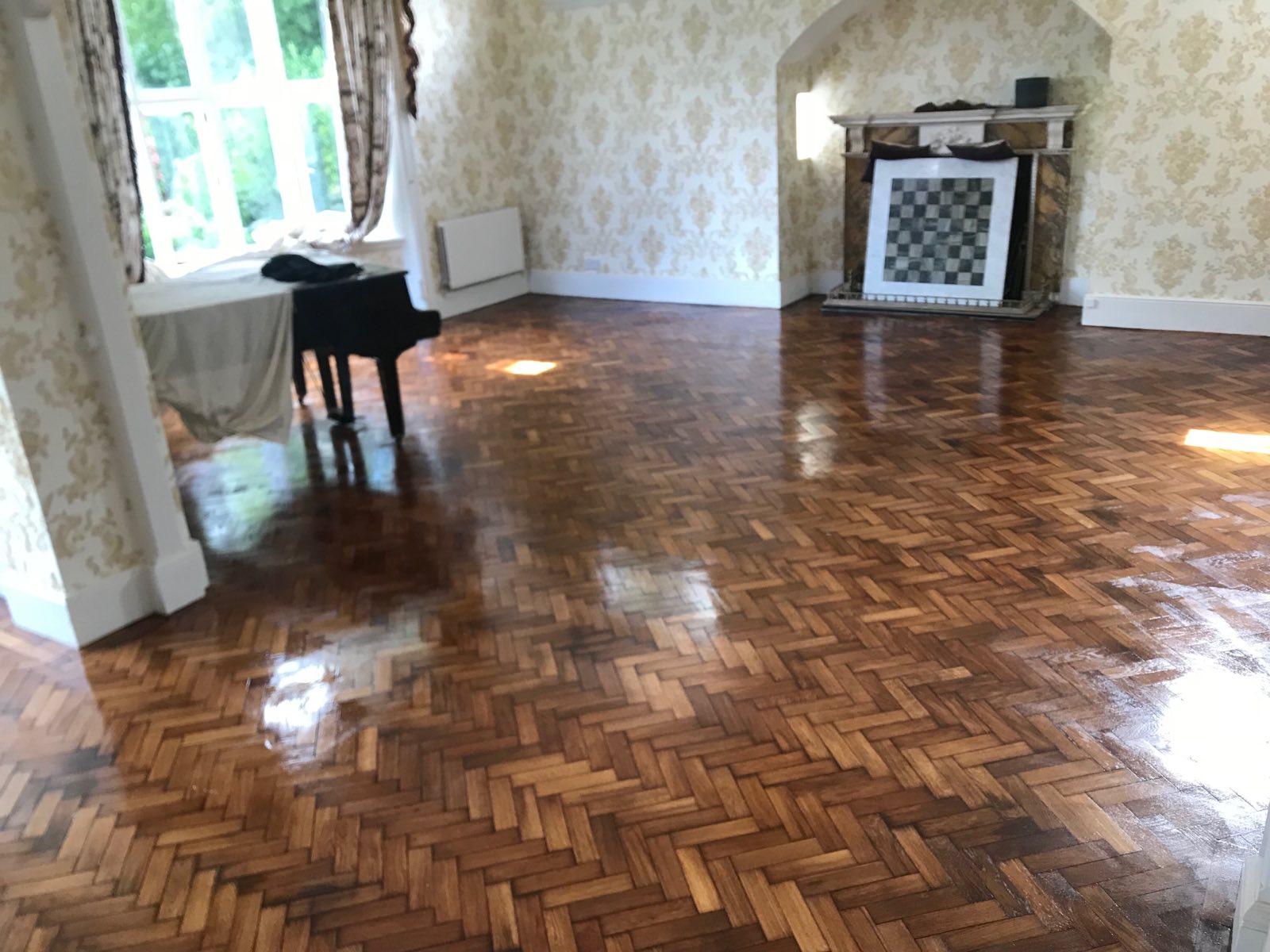
Many oak floors installed fifteen or twenty years ago were finished in warmer honey tones that were popular at the time. As those finishes age, they can darken further and begin to mask the natural character of the timber beneath.
The first sanding pass is often revealing.
Grain that has been hidden for years suddenly becomes visible. Variations between boards emerge. The floor starts to look like wood again rather than a uniform surface.
One customer described their floor as “orangey coloured and scratched” before restoration.
After sanding and refinishing:
“The details of each board really stand out and the colour is much nicer. We went with matte varnish. Looks like a new floor.”
Once the old finish is removed, the timber underneath often looks very different from what people expected.
Why Do So Many Reviews Mention The Same Things?
Interestingly, it is not usually the technical side of the work.
Most concerns arise before the project begins.
People worry about dust. They worry about disruption. They worry about whether the result will justify moving furniture and turning parts of the house upside down for a few days.
Then the work gets underway and the process is often far less disruptive than expected.
Orla Ryan summed it up neatly:
“Super job. Floors look great. Arrived on time. Very nice people to deal with. Fair price.”
It is a short review, but it touches on the practical concerns that matter to most families before floor sanding starts.
Reliability is rarely the headline of a restoration project, yet it is one of the things clients remember afterwards.
Can A Floor Change The Feeling Of A Room?
More than many people expect.
You notice it particularly in older Dublin houses where original timber has been covered, stained, repaired, and lived on for decades.
The walls remain the same. The furniture goes back where it was before.
Yet the room often feels brighter afterwards. Not because it has been redesigned, but because natural timber reflects light differently once years of wear and ageing finishes have been removed.
Eimear T experienced exactly that after restoring twenty-year-old oak flooring and worktops.
“Now I have a modern light oak finish that looks brand new again and very stylish.”
By the end of the project, conversations usually shift away from the floor itself and towards how the room feels.
Why Do Recommendations Matter More Than Advertising?
Flooring is one of those trades where reputation travels quickly.
People live with the result every day. Friends visit. Family members notice. Neighbours ask who carried out the work.
That is why so many reviews end with similar comments:
“Would definitely recommend.”
“Would recommend anytime.”
“Highly recommend.”
Wonder Paws, after having a very old floor restored, wrote:
“Fantastic job done on a very old floor by Damiano. Would definitely recommend.”
Emma Fitzroy shared a similar experience after having her hallway and living room floors sanded and stained:
“We are so happy with how they have turned out. Great service and would definitely recommend.”
Recommendations are earned slowly in this trade. Usually one floor at a time.
We’ve seen plenty of floors that looked finished when we first walked through the door.
Most weren’t.
Artisan Flooring
Artisan Flooring provides floor sanding Dublin homeowners trust for everything from original Victorian floorboards and parquet restoration to contemporary oak flooring, wood floor restoration, repairs, refinishing and bespoke finishes designed around the character of the home.