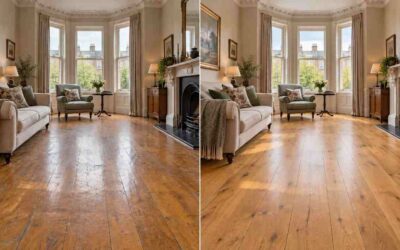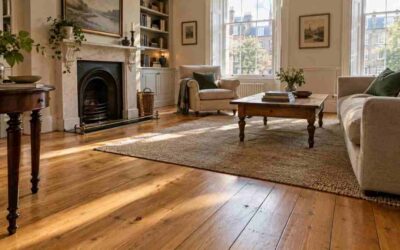
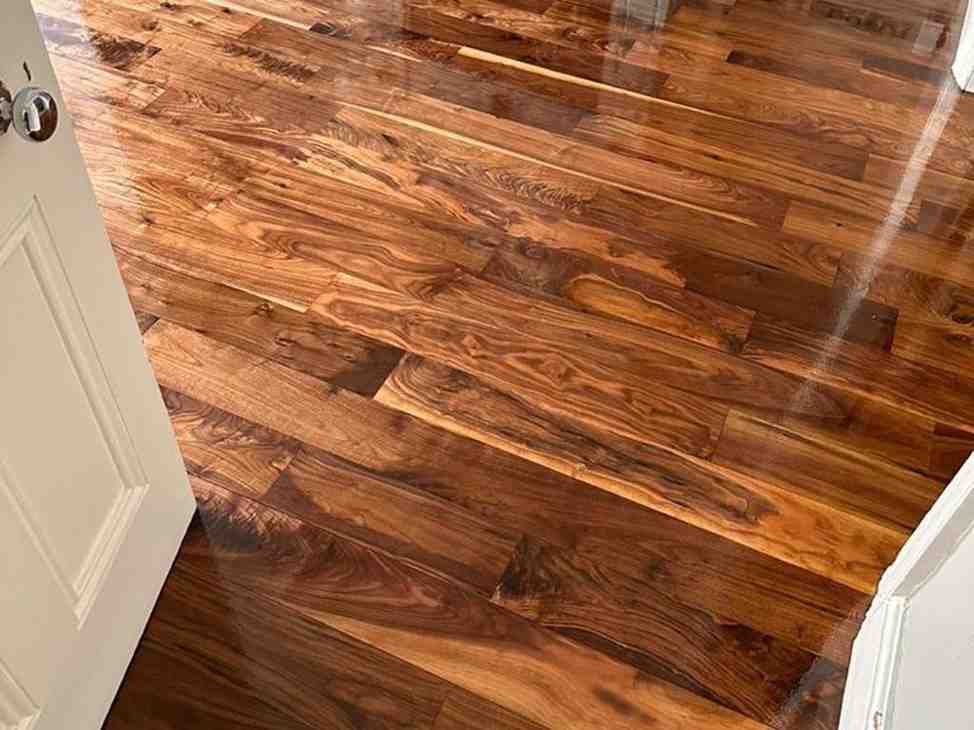
Most enquiries about wood floor restoration begin in much the same way.
A hallway has become scratched after years of family life. An oak floor that once looked warm and inviting has turned dull and lifeless. Paint has been spilled during decorating, or a carpet has finally been lifted in an older Dublin house and nobody quite knows what lies beneath it.
The first question is usually the same.
“Is it too far gone?”
It is a reasonable question. Wooden floors are a significant part of a home, and when they begin to look tired it is easy to assume replacement is the only sensible option. Sometimes it is. Floors that have suffered severe water damage, extensive rot, structural movement or repeated sanding over many decades may need repairs or replacement rather than refinishing.
More often, though, the timber itself is still in remarkably good condition. What people are looking at is years of worn varnish, surface scratches, faded finishes and everyday life layered over good wood.
That is why an honest assessment matters before making any decisions. A proper inspection can usually tell whether floor sanding is likely to restore the floor, whether local repairs are needed first, or whether replacement really is the better investment.
After years of working in Dublin homes, certain stories come up again and again.
1. The Oak Floor Everyone Had Stopped Seeing
One of the most common situations involves oak flooring that has simply become part of the background.
The family walk across it every day without really noticing how much it has changed. Chairs scrape across the same area at the dining table. Shoes wear a path through the hallway. Sunlight fades one side of the room while the other stays protected beneath furniture.
None of this happens overnight, which is why people are often surprised when the room is emptied before sanding begins. With furniture removed, the worn traffic areas suddenly become obvious. What looked like a tired floor is often a sound oak floor hidden beneath years of worn finish.
Provided the timber itself remains healthy, wood floor refinishing can remove surface scratches, restore the natural grain and give the floor another long period of life.
Richard Baird experienced exactly that after having his fifteen-year-old oak flooring restored.
“Our 15 year old heavily worn oak floor is now looking like new again. No mess, no dust.”
The important point isn’t that every old floor looks brand new afterwards. It is that many solid oak floors are far more durable than people expect. A worn finish and a worn floor are not the same thing.
2. The New Floor That Looked Ruined
Interestingly, some of the most anxious calls come from people whose floors are almost new.
When a newly installed wooden floor is marked during decorating or stained after an accident, it feels very different from damage on an older floor. There is often a fear that an expensive investment has been permanently spoiled.
Whether a floor can be saved depends on what has actually happened.
Sometimes the stain sits within the oil, lacquer or protective finish rather than penetrating the timber itself. In those cases, careful spot repairs, re-oiling or local refinishing may be enough. Other situations require a more extensive repair if the stain has worked deeper into the wood.
The difference is not always obvious to someone looking at the floor, which is why experience matters during the assessment.
Aoife Sunderland found herself in exactly this position after painting work left significant staining on a recently fitted wooden floor.
“I contacted Milen who immediately knew what to do and oiled the floors removing the stains. Back to looking brand new.”
Most people remember the repair itself. The real value often lies in knowing what does and does not need to be done before unnecessary work begins.
3. What Is Really Hiding Under That Old Carpet?
Older Dublin houses have a habit of keeping secrets.
Carpets that have been down for thirty or forty years often conceal original timber flooring beneath them. Sometimes it is beautiful old pine. Sometimes it is parquet. Occasionally it is a patchwork of repairs carried out over several generations.
Lifting the carpet can reveal old adhesive, carpet gripper marks, loose boards, paint splashes and the odd surprise left behind during previous renovations.
That first inspection is always important.
Some floors are ready for sanding with only minor preparation. Others need boards secured, damaged sections repaired or gaps addressed before restoration begins. Good floor repairs are often part of achieving a successful result, particularly in period properties where timber has naturally moved over many decades.
When the original floor is sound, wooden floor restoration allows those materials to become part of the home again rather than remaining hidden beneath newer coverings.
Many people begin by asking whether they should replace the floor.
By the end of the conversation, they are choosing between matte, satin or natural finishes instead.
4. The Floor That Everyone Called Orange
There was a period when warm honey-coloured varnishes were extremely popular. Twenty years later, many of those finishes have continued to darken, giving oak flooring an orange or amber appearance that feels dated against modern interiors.
The timber itself is rarely responsible.
It is usually the ageing finish.
One of the most satisfying parts of floor sanding is watching those old layers gradually disappear. As fresh timber begins to emerge, so do details that have been hidden for years — grain patterns, subtle colour variation and the natural character that made oak such a popular flooring choice in the first place.
Modern finishing products also give homeowners far more choice than they once had. Natural oils, matte lacquers and low-sheen finishes allow the timber to remain the focus without creating the heavy glossy appearance that was once fashionable.
One customer described the transformation particularly well.
“Before they were orangey coloured and scratched. Now the details of each board really stand out and the colour is much nicer. We went with matte varnish. Looks like a new floor.”
The oak had not changed.
The layers hiding it had.
5. The Marks That Only Appear When the Furniture Is Moved
There is one stage of almost every restoration that tells the story of how a room has been lived in.
It happens when the furniture is removed.
The outline of a rug that has been in the same place for years suddenly becomes obvious. The timber beneath a sideboard is a different shade from the boards exposed to sunlight every afternoon. Chair legs have left small dents around the dining table, while the route from the hallway to the kitchen is slightly duller than the rest of the room.
People often assume something has gone wrong with the floor.
In reality, it is simply the natural effect of light and daily use.
Sunlight changes timber gradually. Finishes wear where people walk most often. Rugs protect one area while the rest of the room continues to age.
Professional wood floor refinishing can usually blend much of this variation back together, although it is important to be realistic. Deep staining caused by long-term water damage or significant UV bleaching may never disappear completely. An honest assessment should always explain what can be improved and what is likely to remain.
Most people appreciate that honesty. They would rather understand the likely result before work begins than be promised perfection.
6. Some Floors Shouldn’t Be Sanded
One of the biggest misconceptions about the trade is that every wooden floor can be restored.
It would be easy to say yes to every enquiry.
It would also be poor advice.
Some solid timber floors have already been sanded several times over the years and simply do not have enough material left for another full restoration. Some engineered floors have such a thin wear layer that sanding would damage the flooring rather than improve it.
Then there are the floors affected by long-term leaks. Black staining caused by moisture can penetrate deeply into the timber, while loose boards, failed repairs and structural movement often need attention before anyone even thinks about sanding.
Occasionally, the right advice is to replace individual boards, carry out local repairs or leave well alone.
Those conversations are rarely disappointing.
In fact, they often reassure people that they are getting genuine advice rather than a sales pitch. A good flooring specialist should be prepared to explain why a job should not go ahead just as clearly as they explain why it should.
That is part of building trust.
7. The Floor Is Finished, but the Room Feels Different
Every restoration reaches the same point.
The final coat has cured, the dust sheets have been folded away and the furniture begins to return to its place.
It is usually then that people stand quietly for a moment and take in the room as a whole.
They rarely spend long talking about sanding techniques or finishing products.
Instead, they notice that the sitting room feels brighter than it did before. The hallway seems more welcoming. The original character of the house has returned without changing anything else.
That is especially true in older Dublin homes, where timber floors were designed to be part of the architecture rather than hidden beneath carpets or laminate.
Eimear T described that feeling after restoring her twenty-year-old oak flooring and worktops.
“My old fashioned honey colour oak floor and worktops were sanded and lacquered. Now I have a modern light oak finish that looks brand new again and very stylish.”
The most successful wooden floor restoration projects do not erase the age of the timber. Small knots, natural colour variation and the occasional repaired board remain part of the floor’s story.
The aim is not to make an old floor look new.
It is to let good timber look like itself again.
Before Replacing a Wooden Floor, It’s Worth Checking What Is Still There
Replacing a wooden floor is sometimes the right decision. Timber that has suffered extensive structural damage, prolonged water ingress or years of poor repairs cannot always be brought back.
Many floors, however, are judged by the condition of their finish rather than the condition of the timber itself.
Surface scratches, worn varnish, dull colour and years of everyday use can make a perfectly sound floor appear beyond saving when, in reality, floor sanding, careful repairs and refinishing may be all that is needed.
Every floor is different. Older pine boards in a Victorian terrace behave differently from modern engineered flooring. Parquet has its own challenges. Oak responds differently again. That is why a proper assessment is always the first step before deciding whether to restore or replace.
If you are weighing up replacement against wood floor restoration, it is worth asking someone who spends their working life looking beneath old finishes rather than just at them.
Artisan Flooring provides floor sanding in Dublin, wood floor restoration, parquet restoration, floor repairs, and wood floor refinishing for homes across Dublin. Whether it’s an original Victorian floorboard, a family oak floor that has seen twenty years of daily life, or parquet hidden beneath old carpets, every project begins with the same straightforward approach: assess the timber carefully, explain what can realistically be achieved, and recommend the solution that best suits the floor rather than simply the easiest option.