There is an odd thing about wooden floors. People can live with the same one for years without really seeing it.
The hallway gets duller where everyone walks. The sitting room picks up scratches from chairs and furniture. A once-clear oak grain gradually disappears beneath wear, old finish and the accumulated business of everyday life.
Nobody wakes up one morning and notices it has happened. The change is too slow.
Then the floor is restored.
The reaction afterwards is rarely just, “The floor looks better.” People talk about the room. It seems brighter. The furniture looks different against the timber. Someone remembers why they chose oak in the first place or discovers that the old boards they inherited with the house have far more character than they realised.
A good wood floor restoration can do something slightly unexpected: it changes the way people feel about a room they already know intimately.
It’s a reaction we’ve seen plenty of times in Dublin homes, and certain things tend to come up again once the machines are packed away and normal life returns.
1. Why Do People Suddenly Notice the Timber Grain Again?
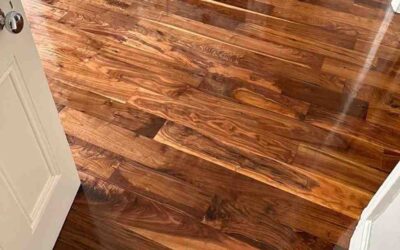
A restored wooden floor reveals grain and natural colour that can become obscured by scratches, ingrained wear and ageing finishes. Once those surface layers are removed and the timber is refinished, individual boards often become visible in a way people have not noticed for years.
This can be particularly striking with oak.
An older finish may have given the entire floor a fairly uniform colour. Add fifteen or twenty years of wear and the eye stops noticing individual boards altogether.
After restoration, people start pointing things out.
There is a particularly attractive grain running through one plank. Another has a knot nobody remembers seeing. A board near the window is slightly warmer than the one beside it.
The floor hasn’t acquired those details during sanding. They were there all along.
It happens with old pine too. Pine tends to carry more evidence of its age: nail marks, colour changes and the occasional board that doesn’t quite match because it was repaired years ago. Once refinished, those details can sit comfortably within the floor rather than making it look tired.
There is a difference between an old floor and a neglected-looking floor. Restoration often makes that difference surprisingly obvious.
2. How Can Restoring a Floor Change the Light in a Room?
Floor restoration can alter how light behaves in a room because the colour and finish of timber affect the way light travels across the space. Removing a darkened or yellowed coating can make the floor appear lighter, while matte and satin finishes each have a different relationship with natural light.
It’s also something a small flooring sample rarely shows properly.
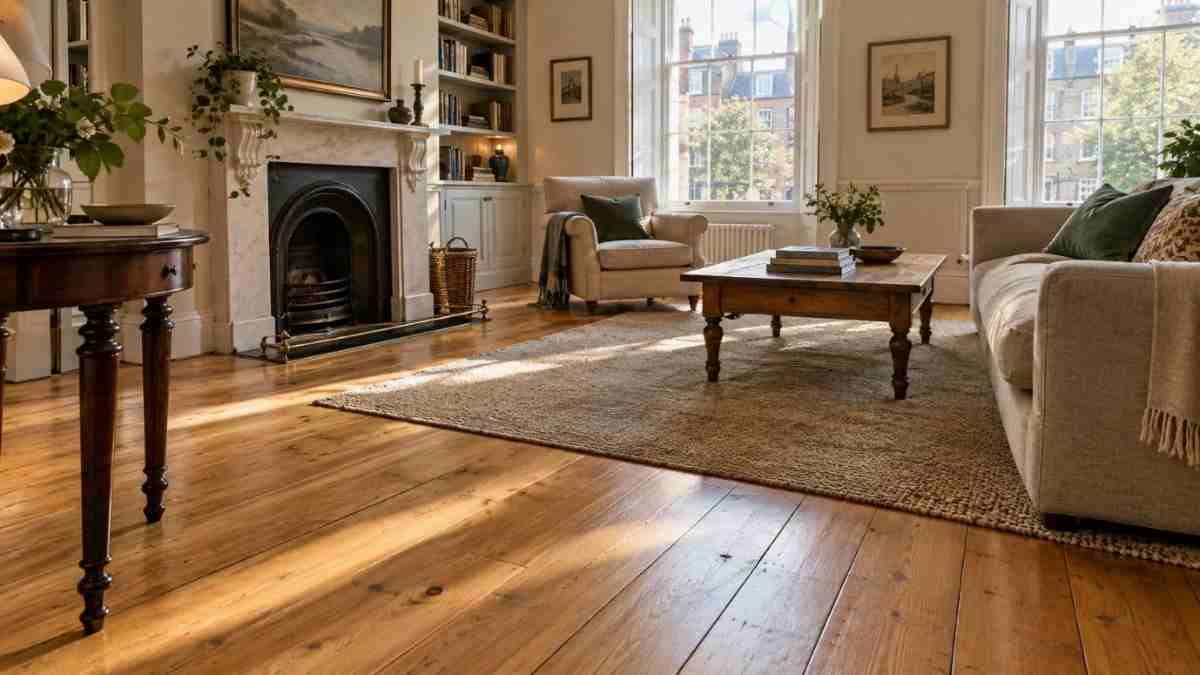
In a Dublin sitting room with a large front window, daylight can travel across several metres of timber. Once a heavy old finish has been removed, the difference can be much more noticeable than expected.
Not necessarily brighter in the stark sense. Often it is softer.
Natural oak in afternoon light has warmth without the strong amber tone associated with some older finishes. Original pine can bring a completely different character to a room once years of darkened coating have gone.
The effect changes throughout the day as well.
People occasionally spend weeks deciding on wall colours and then discover that restoring the floor has altered how those colours appear. Timber occupies an enormous visual area. Change its tone and the whole room responds.
It is one reason finish selection deserves to be done in the context of the home rather than from a photograph on a screen.
3. Why Does Old Furniture Sometimes Look Better After Wood Floor Restoration?
This catches people by surprise.
During restoration, furniture is moved out and the room becomes temporarily empty. Once the work is complete, everything comes back piece by piece.
An old armchair returns.
Then the dining table.
A rug goes down.
Suddenly things that had been part of the room for ten years seem to work better.
The floor provides the background for almost everything else in a room. Change a tired or dated finish and familiar furniture can look quite different against it, without anything else having been replaced.
There is a practical lesson in this for anyone considering a larger refurbishment. Sometimes people decide that an entire room needs changing when the element making it feel tired is the surface underneath everything else.
It doesn’t mean restoring a floor magically redesigns a house. It simply gives the furniture a different setting.
And it can save a perfectly good table from being blamed for something that was never the table’s fault.
4. Why Do Original Floorboards Feel So Right in Older Dublin Homes?
Original floorboards often suit period Dublin homes because their proportions, timber and natural ageing belong to the architecture around them. When the boards remain sound, careful restoration can retain details that are difficult to reproduce convincingly with newly manufactured flooring.
Older Dublin houses have been altered repeatedly.
Fireplaces disappear and sometimes return. Kitchens move. Extensions are added. Doors get blocked up. Carpets arrive, then laminate, then somebody eventually wonders what is underneath it all.
Original flooring is often one of the few materials that has quietly remained.
When old boards are uncovered, they are not always beautiful at first sight. There can be paint around the edges from a time when only the centre of the room was covered by a rug. There may be small repairs where pipes were installed or boards that have darkened differently near a fireplace.
Some need considerable work.
But when the timber is sound, those boards have something new timber can’t quite reproduce: they belong there.
A successful restored wooden floor in a period house shouldn’t look like somebody has attempted to make 100-year-old timber pretend to be new. The floor can be clean, sound and beautifully finished while still showing its age.
That balance is usually where the character lies.
5. Why Do Families Become More Protective of a Floor After It Has Been Restored?
There is usually a short period immediately afterwards when nobody wants to be the first person to mark it.
Shoes receive suspicious looks.
Chairs are lifted rather than dragged.
The dog is briefly regarded as a potential threat to domestic harmony.
Normal life soon resumes, as it should. A floor is there to be lived on.
Something does tend to remain, though. People understand the material better after seeing it restored. They know what the timber looks like beneath the old finish, and they have seen how years of small scratches eventually add up.
Sensible care tends to replace that early preciousness. Grit gets noticed sooner, furniture is treated with a little more thought and changes in the finish are easier to spot.
A family floor will acquire marks again. Children’s toys, dogs, dinner parties and daily traffic see to that. The aim isn’t to preserve a wooden floor in museum condition.
It is to let it age well.
6. Can Floor Restoration Make You Appreciate Imperfections More?
Before restoration, everything can look like a problem.
There are scratches, dark areas, gaps, old repairs and marks from furniture all competing for attention. It is understandable that people look at the whole lot and conclude that the floor is finished.
Afterwards, individual imperfections are seen differently.
A small repair beside the hearth is no longer surrounded by failing varnish and grime. It is simply an old repair. A slightly darker pine board becomes part of the variation across the room.
Of course, not every imperfection deserves celebrating. Broken timber is still broken timber. Loose sections need attention, and some staining cannot be made attractive by calling it “character”.
Knowing where to stop is part of good restoration.
There is a point where further intervention can make an old floor less convincing rather than better. Period timber doesn’t need cosmetic perfection to look beautiful.
7. Why Does the Finished Floor Often Become Something People Want to Show Others?
This is probably the most human part of the job.
A new floor can be exciting. People choose it, wait for it and watch the room come together around it.
Restoration has a slightly different emotional pull.
There is a before story.
“You should have seen this a week ago.”
“That mark was there for years.”
“We thought we’d have to rip the whole thing out.”
Visitors get shown the floor. Friends are told what was underneath the carpet. Someone produces an old photograph on their phone to prove how dark it used to be.
The pride comes partly from having something beautiful, but also from having kept something.
For people living in older houses, that can matter. The floor has already belonged to the home for decades. Restoring it means the next chapter doesn’t begin with a skip outside the front door.
What happens once the novelty wears off?
Eventually, nobody stands in the doorway admiring it every morning.
The chairs go back to being chairs. The dog stops being monitored quite so closely. Someone drops something heavy and creates the first small mark.
That is normal.
Wooden flooring is successful precisely because it can live with a house. It doesn’t have to remain untouched to remain attractive.
The more useful test is how the floor looks several years later. Was the finish appropriate for the way the room is used? Was good timber preserved rather than unnecessarily replaced? Were repairs dealt with properly before refinishing? Has the natural character of the wood been allowed to remain?
Those decisions are less exciting than the first reveal, but they determine whether the restoration still feels worthwhile long after the novelty has gone.
Sometimes a floor needs less work than you think
There is a useful middle ground between doing nothing and having the whole floor sanded.
Some floors need maintenance rather than restoration. Others have one troublesome area while the rest remains perfectly good. Occasionally a client asks about changing a floor and, after looking at it properly, there is very little wrong with what they already have.
Those are good outcomes too.
The purpose of working with timber isn’t to find the biggest possible job. It is to understand what the floor needs at that point in its life.
A thirty-year-old oak floor, a newly installed engineered floor and original boards in a Dublin terrace should not all receive the same treatment simply because they are made of wood.
A floor should still belong to the room
The best wooden floor is not necessarily the newest, palest or most fashionable. What matters more is whether it works with the architecture, the natural light and the way people actually use the room. Sometimes new timber is right. Sometimes the better floor is already under your feet.
People naturally notice the dramatic change straight after a floor has been restored.
The more interesting test comes later.
Six months afterwards, does the floor feel comfortable in the room? Does it work with the furniture rather than compete with it? Can people actually live on it without worrying about every mark?
Experience becomes useful here. Not in promising that every old floor can be saved, or that one finish is right for every house, but in recognising what a particular piece of timber can realistically become.
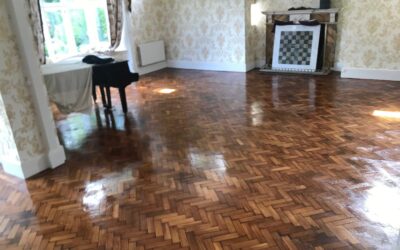
Artisan Flooring restores, repairs and installs wooden floors throughout Dublin, from original period boards to parquet, oak and engineered timber.
Sometimes the best result is a completely new floor.
Sometimes it is hearing someone say, a few days after the work is finished:
“I can’t believe that was the same floor.”