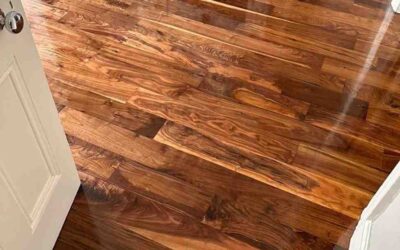
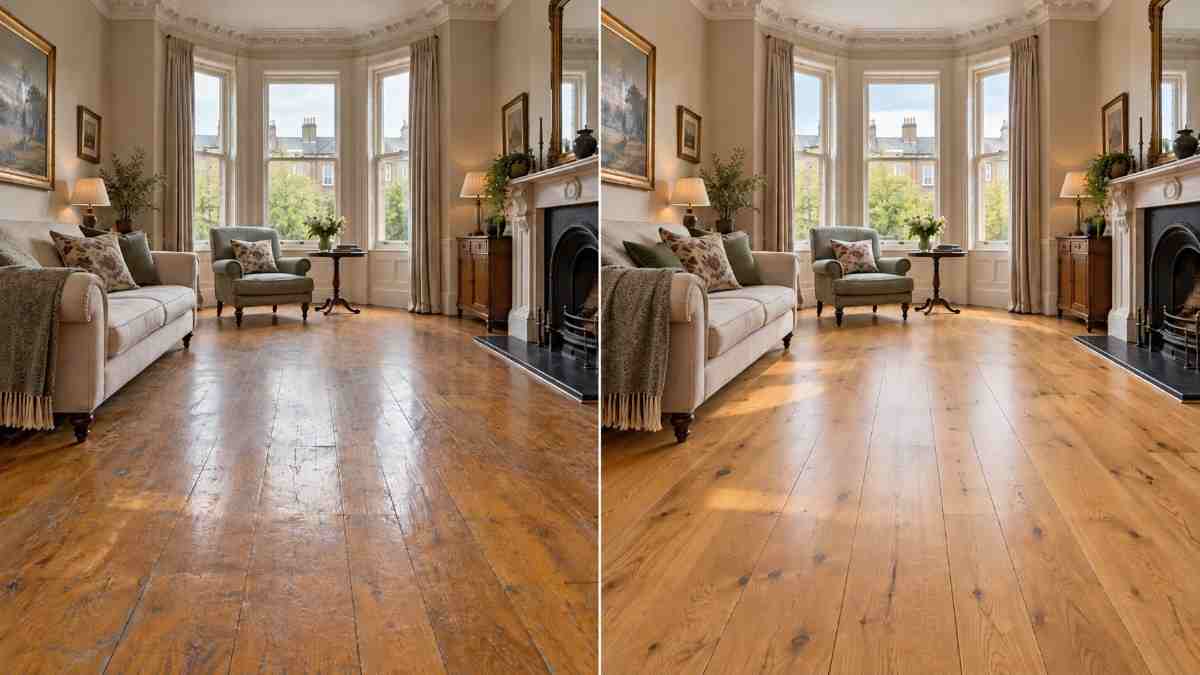
Having your wooden floors restored means handing over part of your home to someone you may not know well. Alongside choosing the finish, you need to know what the work will cost, how much disruption to expect and what happens if a problem turns up.
By the time most people contact a floor restoration company, they’ve usually looked at photographs, compared finishes, read reviews and perhaps asked a neighbour who restored their floors. But will the price change halfway through? How long will the rooms be out of use? And what happens if the timber isn’t in the condition everyone expected?
These are reasonable concerns. Wooden flooring is expensive to replace, and once a floor has been sanded, there is no putting that layer of timber back.
A review by Dublin customer Anastasia Baburin offers a useful look at how Artisan Flooring approached a restoration project, from Milen’s initial assessment to the work carried out by Damiano. The finished result mattered to her, but so did the quotation and the communication along the way.
What did one Dublin customer say about her wood floor restoration?
Anastasia Baburin’s testimonial describes a restoration project in which Milen visited her home, assessed the flooring and provided a quotation before Damiano carried out the work over two days. Her review praises the explanation of costs, the communication during the project and the finished floors.
She wrote:
“He came to my home, took the time to assess everything properly, and provided a clear, upfront quote with all the costs laid out.”
She also described Damiano keeping her informed about progress and setbacks during the work. According to her review, the finished floors exceeded her expectations.
The distinction between those parts of the experience is worth keeping in mind. A successful restoration begins well before sanding starts, with an assessment of what the timber needs and an agreement about the work to be done.
The full customer account can be found on our testimonials page.
Why should a floor restoration company inspect your floors before quoting?
A proper inspection helps establish the type and condition of timber, the extent of wear, any visible repairs and the finishing options available. It also allows the flooring specialist to identify potential complications before preparing a quotation.
Photographs can show visible wear and the room’s layout, but they cannot establish whether a board moves underfoot or how much usable timber remains.
A dark patch might be surface staining or something that has penetrated further into the wood. A board that looks sound may move when walked on. An engineered floor may have a thinner wear layer than expected, particularly if it has been sanded before.
There are practical details to consider too. Is the property easy to access? Are there awkward corners or fitted units? Does the flooring continue beneath kitchen cabinets? Are damaged sections likely to need attention before sanding?
In Anastasia’s case, Milen visited the property and assessed the work before providing the quotation. Her review specifically praises the clear quotation and the explanation of costs.
Can a flooring specialist guarantee the finished result during an inspection?
Not entirely. An experienced specialist can assess the timber, explain likely outcomes and identify potential problems, but some conditions only become apparent once an old finish has been removed.
Deep staining may remain visible after sanding. Previous repairs can respond differently to a new finish, and timber that has already been sanded several times may have limited material remaining.
An inspection should give the homeowner a realistic picture of what is possible, including the areas where the result cannot be predicted precisely.
What should be included in a professional floor restoration quote?
A professional floor restoration quotation should explain the agreed work, the areas being treated, the proposed finishing system, any identified repairs and the price. It should also clarify how additional work will be handled if previously concealed problems are discovered.
For example, a quotation for sanding and varnishing an oak sitting room might cover preparation, sanding and application of the agreed finish.
But what happens if damaged boards are discovered? Will they be repaired or replaced? Is that included in the price? Will the homeowner be consulted before additional work begins?
It is worth checking whether furniture removal, local repairs, thresholds and other finishing details form part of the agreed work. These arrangements vary by project, and assumptions on either side can create unnecessary confusion.
A quotation should also make clear which rooms and floor areas are covered. In an older property, a hallway and adjoining sitting room may look like one continuous floor while requiring different levels of preparation.
Anastasia’s review specifically praises the clarity of Milen’s quotation, rather than simply commenting on the final price.
What happens when floor restoration doesn’t go exactly to plan?
Unexpected setbacks during wood floor restoration can include concealed damage, previous repairs, difficult staining or conditions that affect the planned work. When an issue arises, the available options and any changes to the agreed work should be explained before proceeding.
Anastasia’s review mentions that Damiano kept her updated about progress and setbacks:
“Throughout the works, the communication was excellent, with Damiano keeping me updated on progress as well as setbacks and coordinating everything seamlessly.”
For a homeowner, useful communication means understanding whether a discovery affects the finish, the cost, the schedule or the amount of repair work required.
Sometimes the original plan can continue with a minor adjustment. In other cases, it may be sensible to stop and discuss the options before removing more timber or carrying out repairs.
How do you know whether your wooden floor needs repairs before sanding?
Wooden floors may need repairs before sanding if boards are loose, cracked, damaged or inadequately supported. An inspection should establish whether those problems affect the proposed restoration and whether they can be corrected without replacing large sections of flooring.
People naturally focus on the finished appearance. They want to know whether the scratches will disappear, what colour the timber will become and whether a matte finish would suit the room.
But a loose board can remain loose beneath a beautiful new finish. An old repair may need securing, while a damaged section may be better replaced than repeatedly filled.
There is also the question of how much timber remains available for sanding.
Solid wooden flooring can often tolerate several restorations over its lifetime, depending on its construction, thickness and previous treatment. Engineered flooring needs more careful assessment because its real wood wear layer may be relatively thin.
The right decision isn’t always to sand the whole floor. Sometimes a local repair is enough. Sometimes more preparation is required than originally expected. Occasionally replacement is the more sensible option, particularly where the timber is structurally compromised or has insufficient material left for another full sanding.
These distinctions matter because an attractive surface finish cannot compensate for underlying problems that have been left unresolved.
Why does communication matter during professional floor sanding?
Professional floor sanding temporarily changes how a household uses its rooms. Clear information about preparation, access, working times, finishing and when the floor can be used again helps people plan around the disruption.
Think about an ordinary family sitting room. The sofa has to go somewhere, the television may be disconnected and a dining table might be sitting in the kitchen. Everyone needs to know when those things can go back.
In an apartment, the arrangements may be even more awkward, particularly if there is little space to store furniture while the work is underway.
People often underestimate how much of their routine depends on a particular room until they cannot use it. Knowing when the work will begin and how long each stage is expected to take makes life easier.
The same applies to drying and curing.
A floor may feel dry to the touch before its finish has fully cured. The appropriate waiting time depends on the product used, the conditions in the property and the manufacturer’s instructions. Walking on a newly finished floor, replacing heavy furniture and putting rugs back may involve different requirements.
Anastasia’s restoration took two days, according to her testimonial. That was the duration of her particular project, not a standard timetable for every floor. Other rooms, repairs and finishing systems may require different arrangements.
Can you stay in your home while wooden floors are being restored?
It is often possible to remain in a property during wooden floor restoration, although access to the rooms being treated will be restricted. The practical arrangements depend on the layout, extent of the work, finishing products and the instructions governing their safe use.
This is one of the questions people sometimes ask quite late in the conversation.
They have chosen the finish and agreed on the work, then realise that the hallway connects every room in the house, the stairs are also being restored or the only route to the kitchen passes through the area being finished.
These details need planning, particularly where children, pets or people working from home are involved.
For some households, arranging to be away for part of the work is convenient. Others can manage by keeping unaffected rooms accessible, provided the layout and finishing requirements allow it.
Ventilation and any odour associated with the finishing products also need consideration. Modern floor finishes vary, and the product manufacturer’s instructions should guide when rooms can safely be occupied and used again.
It is worth discussing these arrangements before work begins rather than trying to reorganise the household on the first morning.
What should you look for in customer reviews before choosing a flooring company?
Useful flooring reviews describe more than an attractive finished floor. Look for specific comments about the initial assessment, pricing, punctuality, communication, how unexpected issues were handled and whether the completed work met the customer’s expectations.
Photographs are valuable, particularly genuine before-and-after images, but they cannot tell you whether the team arrived when expected or explained a change in the schedule.
They cannot establish whether the customer was given clear options when additional work became necessary.
A detailed review can provide some of that context.
Anastasia’s testimonial is useful because it follows the project from Milen’s visit and quotation through to Damiano’s work and the finished result. It describes separate aspects of the service rather than offering only a general recommendation.
When comparing flooring companies, it is worth looking for reviews that explain what was actually done. A customer describing a difficult repair, a particular finish or the way a project was organised often provides more useful information than a short rating alone.
Why is honest advice sometimes more valuable than a perfect sales pitch?
A flooring specialist should be willing to explain the limitations of restoration as clearly as its possibilities. That includes discussing difficult stains, unsuitable floors, visible historic repairs and situations where the work may not achieve exactly the appearance a customer has imagined.
People often begin with a photograph of a floor they love. Perhaps it is a pale oak interior from a magazine or a beautifully restored parquet floor seen online.
The difficulty is that the timber in their own home may be quite different.
Different species take finishes differently. Previous staining can affect the result, and old repairs may remain visible. A finish that looks lovely in a bright photograph may appear quite different in a north-facing Dublin sitting room.
It is better to discuss those differences before the work begins.
Sometimes the customer changes their mind about the colour. Sometimes a more restrained finish makes sense. Occasionally the original idea simply isn’t suitable for the floor.
A useful assessment allows room for those conversations, including the possibility that the floor needs less work than first expected or that replacement would be more appropriate.
When should you speak to Artisan Flooring about your wooden floors?
An assessment is a useful starting point when you’re considering sanding, repairs or wood floor restoration. It gives you an opportunity to discuss the timber’s condition, possible finishing options and any practical arrangements that could affect the work.
Anastasia’s account is available alongside other customer experiences on the Artisan Flooring testimonials page.
If you’re considering restoring your floors, contact Artisan Flooring to discuss their condition, any repairs and the finish you have in mind. Ask what the quotation includes and how access to your rooms will be managed during the work.